Best Time To Visit Mount Rushmore? Month-by-Month Guide
Planning a trip to Mount Rushmore often starts with one big question: what time of year should I go?
The truth is, there isn’t just one “best” time. Each month brings its own flavor — snowy quiet mornings, patriotic crowds in July, or golden hillsides glowing in October. Your perfect timing depends on what kind of traveler you are. Do you want to see the monument surrounded by fall colors? Do you love a lively summer atmosphere? Or do you prefer the quiet calm of winter?
This guide takes you through every month of the year so you can decide which season fits your style.
January: Quiet, Snowy, and Serene
January transforms Mount Rushmore into a peaceful winter scene. Highs usually sit in the 30s, and nights dip well below freezing, so a warm coat is non-negotiable. Snow blankets the pines and granite, giving the monument a postcard look that few visitors ever see. Crowds are almost nonexistent, which means photographers can capture the faces of Washington, Jefferson, Roosevelt, and Lincoln without another soul in sight. For travelers who like calm and wide-open spaces, January is a secret sweet spot.
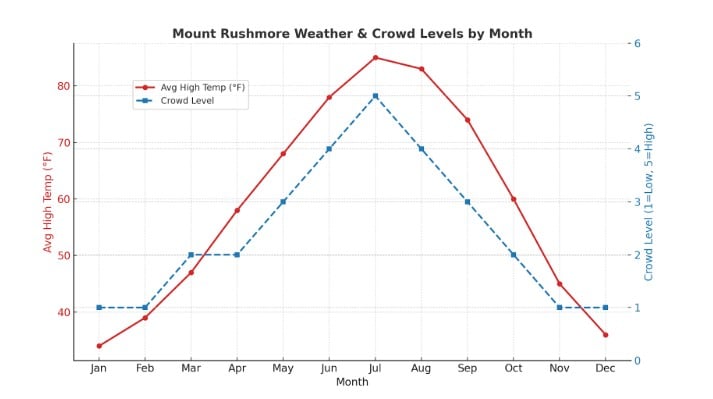
📊 Mount Rushmore Weather & Crowd Levels by Month
- Red line = Average high temperature (°F)
- Blue dashed line = Relative crowd level (1 = very low, 5 = very high)
February: A Romantic Winter Setting
February stays cold, but the days grow a little sunnier. The memorial remains quiet, so couples often enjoy the stillness and reflective atmosphere. History lovers especially enjoy this month, since it allows time to read exhibits, walk the grounds, and take it all in without rushing. Pair the visit with a cozy stay in Rapid City for a memorable winter getaway.
March: A Hint of Spring
As the snow begins to melt, highs climb into the 40s and 50s. Wildlife sightings become more common, and early greenery peeks through the hillsides. Crowds remain manageable, with only a few bumps during spring break. Families looking for budget-friendly trips will find hotel rates lower than in summer, and Parks Explorers can stretch their legs on trails that are beginning to clear.
April: Spring Awakening
By April, the Black Hills shake off their winter coat. Days are milder, and wildflowers start appearing along roadsides. While you might still catch a surprise storm, most days are pleasant for sightseeing. Families appreciate this time of year because it offers a balance between mild weather and lighter crowds. Seasonal attractions, such as the Fort Hays Chuckwagon Supper & Show, begin preparing to reopen, which adds more options for those who like variety.
May: Fresh Green Views
May feels alive. Temperatures climb into the 60s and 70s, and the hillsides turn bright green. All visitor services are open, making this an easy month for first-time visitors. Photographers love the soft spring light and vivid landscapes. Families also find it a comfortable time to travel before the heat of summer. If you’re aiming for late May, keep in mind that Memorial Day weekend kicks off the summer rush, so book tours and hotels early.
June: Summer Energy Arrives
June brings warm days in the 70s and 80s and a lively atmosphere. Visitor numbers climb quickly, especially after mid-month, as families hit the road for summer break. One of the highlights is the evening Lighting Ceremony, which runs through late September. Kids are often captivated by this event, making it a must for families. Arriving early in the morning helps avoid long parking lines and gives you cooler conditions to walk around.
July: Patriotic Spirit in Full Swing
July is the busiest month of the year, with highs in the 80s and 90s. Around Independence Day, the memorial buzzes with patriotic energy. Flags wave, music plays, and crowds gather to celebrate. For history enthusiasts, there’s nothing like being at Mount Rushmore during this month. The flip side? Expect long lines, packed parking, and higher hotel rates. Plan ahead, and you’ll still have a memorable experience.
August: Late Summer Buzz
August keeps the heat going, though evenings start to cool. Crowds remain high through the middle of the month. This is also when the Sturgis Motorcycle Rally rolls through, bringing thousands of visitors. If you love events and an energetic vibe, August delivers. If you prefer a quieter trip, you’ll want to avoid rally week and aim for late August when things calm down.
September: The Sweet Spot
September often wins as the favorite month to visit. Days stay warm in the 70s, nights are crisp, and the big summer crowds disappear after Labor Day. The weather is comfortable, and you’ll have more space to breathe at overlooks and exhibits. Families find it easier to navigate with kids, photographers rave about the golden light, and history buffs enjoy more time with guides and displays. For multi-generational trips, September balances it all — comfort, fewer lines, and plenty of daylight.
October: Fall Colors & Crisp Air
October paints the Black Hills in shades of red, orange, and gold. Highs land in the 50s and 60s, with chilly evenings perfect for cozy jackets. Crowds are minimal, which makes sightseeing more relaxed. Scenic beauty seekers and photographers often say October is their favorite time of year here. Pair your visit with a drive through Custer State Park for some of the best fall foliage in the Midwest.
November: Reflective and Calm
By November, colder weather returns, with highs in the 40s and frosty mornings. Visitor numbers drop sharply, making it one of the calmest months of the year. History lovers often choose November for the quiet, unhurried atmosphere. Hotel rates also dip, so this is a good choice for travelers who want a slower pace and lower costs.
December: Holiday Glow
December closes the year with snow, chilly days, and festive events in nearby towns. Temperatures hover in the 30s, and the hills sparkle under fresh powder. Rapid City and Hill City decorate for the holidays, so you can pair your visit to the memorial with seasonal celebrations. For couples or photographers chasing that postcard look, December is magical.
Which Season Fits Your Style?
- History Lovers: July for patriotic energy, or September–November for peaceful reflection.
- Scenic Beauty Appreciators: May for green landscapes, or October for unforgettable fall colors.
- Parks Explorers (Families): June for programs and kid-friendly activities, or September for comfort and fewer lines.
Final Thoughts
There isn’t one perfect answer. The right time depends on your preferences: crowds vs. solitude, heat vs. crisp fall air, winter quiet vs. summer buzz.
What doesn’t change? A guided sightseeing tour turns any month into a richer experience. Instead of stressing about parking or schedules, you can relax while expert guides bring the history and landscapes of the Black Hills to life.
📍 Ready to plan your visit? Choose the right Mount Rushmore Tour for your travel style
Mount Rushmore Weather & Crowd Levels At A Glance
Sometimes it helps to see the whole year in one snapshot. Here’s a chart showing how weather and crowds shift month by month.
Accessibility Features Year-Round
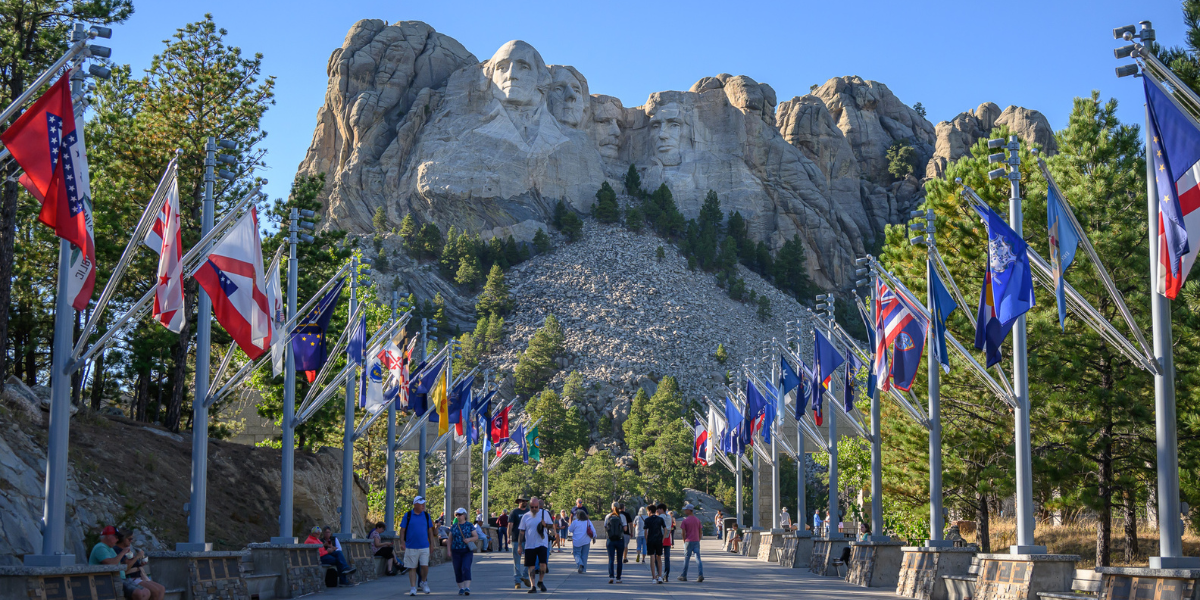
Mount Rushmore makes it a point to welcome visitors of all abilities. You’ll find accessible parking, paved walkways, and barrier-free bathrooms throughout the site. The main viewing terrace, the Avenue of the Flags, and much of the Presidential Trail are all paved and suitable for wheelchairs and strollers.
Elevators connect the parking garages, visitor center, and Grand View Terrace, making it easier for those with mobility challenges to enjoy the most popular viewpoints. For extra support, manual wheelchairs (including wide sizes) are available free of charge at the information center. Drop-off zones and upper parking levels are also designed with accessibility in mind.
Seasonal Access
The memorial is open year-round (except Christmas Day), and accessibility features are generally operational. During winter, snow and ice can make surfaces slick, and in rare cases, severe weather may temporarily close elevators or certain walkways. If you are pushing a stroller or using a wheelchair, the mild months provide smoother paths.
Best Seasons for Accessibility
Spring through fall, especially September, is considered the sweet spot. You’ll enjoy mild weather, lighter crowds, and clear walkways, making it one of the most comfortable times of year for visitors prioritizing accessibility.
Frequently Asked Questions About Visiting Mount Rushmore
When is Mount Rushmore the least crowded?
The lightest crowds are in late fall (October–November), winter (December–February), and early spring (March–April). September after Labor Day is also a great balance of good weather and fewer visitors.
What is the busiest month at Mount Rushmore?
July is the busiest month, especially around the Fourth of July holiday when patriotic celebrations bring the largest crowds of the year. Expect long lines, full parking lots, and higher hotel rates.
Is Mount Rushmore open year-round?
Yes! Mount Rushmore is open 365 days a year, though hours of operation for the visitor center, gift shop, and programs vary seasonally. Winter may limit access to some nearby attractions due to snow.
What time of day is best to visit Mount Rushmore?
Early mornings and evenings are best to avoid crowds. If you want a unique experience, attend the evening Lighting Ceremony (May through late September).
Can you see Mount Rushmore at night?
Yes. The memorial is lit each evening, and from late May through late September, the Lighting Ceremony adds a moving patriotic program you won’t want to miss.


0 Comments